What we’re thinking
Happy Thanksgiving – more than an annual event
Happy Thanksgiving to our friends over in North America (and everyone else too!). This time of year gets me thinking about what I am thankful for, and how I do (or don’t) share my thanks.
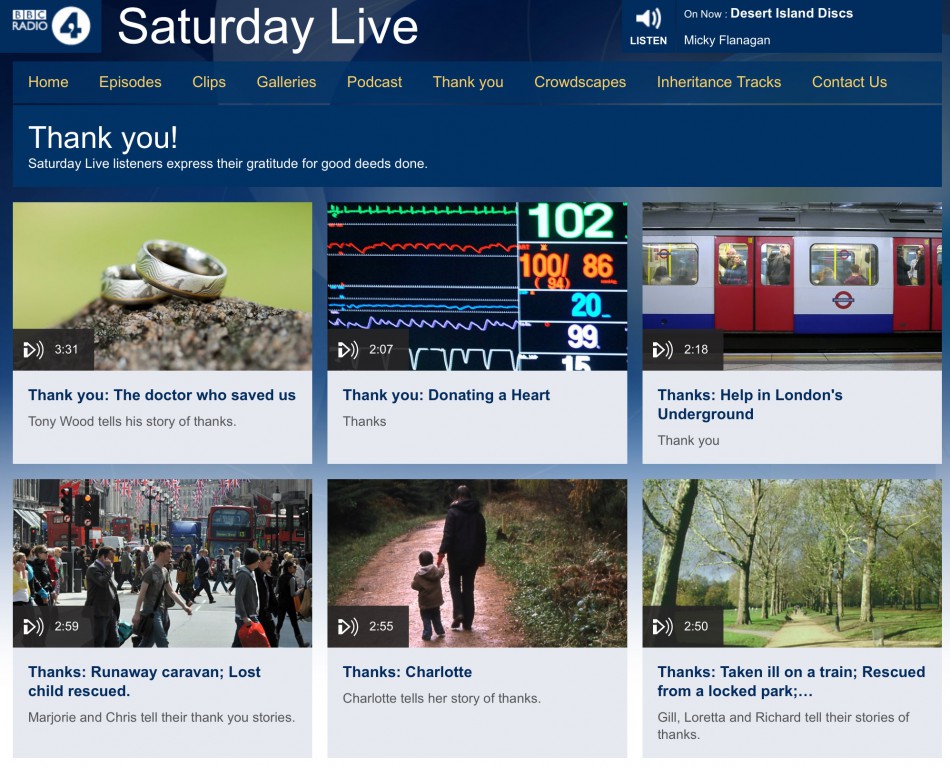
For the last few years on Saturday mornings I have been developing my taxi driving skills, ferrying my son and daughter to different rugby/football/hockey/cricket/athletics matches. A common feature of these journeys is racing to drop off the kids (as I’m normally running late!) and then, whilst the teams warm up I head off to a nearby coffee shop – lovely flat whites! On the way I regain control of the car radio and often switch from the kid’s favourite, Capital Radio, to BBC Radio 4. I’ve become attached to the morning Saturday Live show and often find myself in tears at a weekly feature they have called Thank Yous.
The invitation to listeners is to record their Thank Yous that have never been shared. Often to strangers who have had a positive impact in some way on an aspect of our life for which we didn’t get the chance to thank them. And in many cases this impact is probably unknown.
It’s a beautiful moment. Very meaningful. And also provocative. You can check some out here.
It makes me question the extent to which I show my appreciation to others. Am I saying enough Thank Yous?
In our work as Coaches, and particularly on our InsideOut Adventure programme, we explore opportunities to appreciate others around us, within our teams and outside, often just to say thank you. And we challenge ourselves with some questions that you might want to try yourself:
What do you want to appreciate this week? This month? This year?
To whom do you want to say thank you?
Jot down their names. And then circle your top 3 and start with them. Notice the impact that you have when you expand your appreciation repertoire. There are a range of different ways that people have shared as to how they give meaningful appreciation – most don’t do it on Radio 4! – and it ranges from conversations, emails, WhatsApp recordings, videos, flowers, gifts of different types. But the consistent element is the thought that goes into saying thank you and the impact that the appreciation has.
In our last blog I mentioned the book ‘Thanks’, in which the psychologist Dr Robert Emmons shares research and insights on the practice of gratitude. The examples on Radio 4 show the positive impact on the people who are saying thanks, the thousands of listeners, and no doubt the person receiving the thanks.
You may be want to bring your appreciation repertoire into closer focus this week. Enjoy!
Happy Thanksgiving!

Andrew Bidnell is a professional certified coach and an experienced consultant who founded InsideOut Consulting in 2006. The focus is on leadership and communication and, in particular, the challenge of engagement – of self and of others – to achieve maximum impact and fulfillment. He has worked internationally with 1,000+ leaders in the public, private and not-for-profit sectors, always seeking to facilitate, challenge, support and unlock potential that lies inside an individual, a community, an organisation, and bring that strength, passion and knowledge out for maximum impact.